
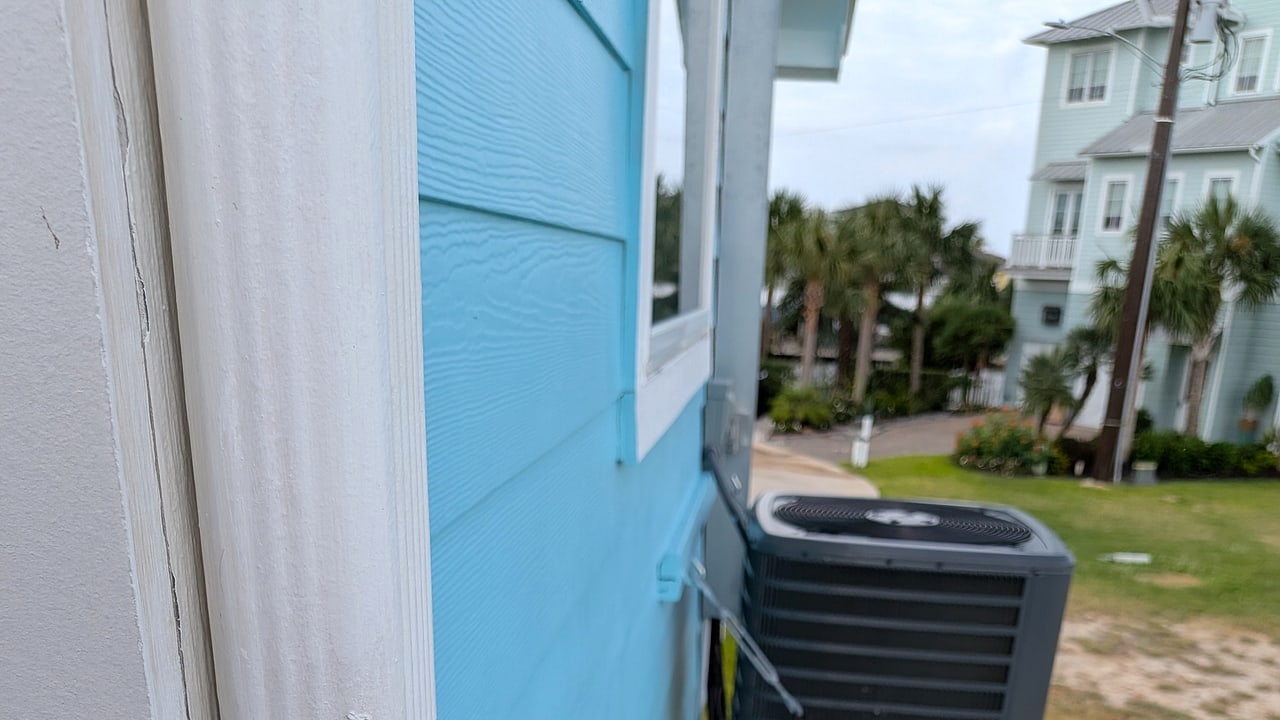
Properties situated within five miles of the Gulf of Mexico, Galveston Bay, or West Bay endure one of the most chemically aggressive outdoor atmospheric environments in North America. High relative humidity, warm ambient temperatures, and continuous airborne marine sodium chloride (salt fog) combine to trigger rapid galvanic oxidation across mechanical equipment, structural fasteners, and electrical infrastructure.
1. The Electrochemistry of Galvanic Corrosion in Coastal HVAC
Standard residential and light commercial air conditioning condensers utilize copper refrigerant tubing mechanically expanded into thin aluminum cooling fins. Copper and aluminum occupy vastly different positions on the galvanic potential scale (copper is noble/cathodic at +0.15V, while aluminum is active/anodic at -0.90V).
When airborne salt fog deposits an electrolyte solution across the coil face, a continuous micro-galvanic current flows between the metals. The sacrificial aluminum fin sacrifices itself to protect the copper tube, dissolving into powdery white aluminum hydroxide. Within 48 months, the fins flake away, airflow drops by 60%, head pressures skyrocket, and the hermetic scroll compressor overheats and seizes.
2. Exterior Electrical Disconnects & Stainless Steel Enclosures
Standard painted steel NEMA 3R outdoor electrical disconnect boxes and main service panels rust through along the bottom seams in coastal environments within 5 to 7 years. Once salt air penetrates the enclosure, copper busbars oxidize into green copper carbonate, terminal lugs seize, and circuit breakers fail to trip under thermal overloads. Coastal installations require NEMA 4X stainless steel or non-metallic polycarbonate enclosures.
3. Sacrificial Anodes and Preventive Rinsing Regimes
To prolong coastal equipment life, property owners should install zinc sacrificial anode collars on condenser tubing and install automatic freshwater misting rinse timers to wash away accumulated salt crystals after daily onshore wind cycles.
4. Coastal Building Science & Hurricane Hardening Standards
Properties built along the Texas Gulf Coast face distinct environmental stressors that inland structures rarely encounter. Preserving building longevity and insurance eligibility requires rigorous adherence to coastal building science principles:
- TDI Catastrophe Area Compliance: Verifying continuous structural load paths from roof rafters through wall framing down into foundation pilings in accordance with Texas Department of Insurance (TDI) windstorm building codes.
- Marine Atmospheric Corrosion Protection: Auditing exterior mechanical disconnects, HVAC condenser coils, and structural fasteners for hot-dip galvanized or 316 stainless steel coatings to resist aggressive sodium chloride salt fog corrosion.
- Psychrometric Moisture Management: Evaluating building envelope air-tightness, vapor retarder placement, and dedicated dehumidification systems to prevent hot humid outdoor air from condensing against air-conditioned interior surfaces.
- Storm Surge and Hydrostatic Relief: Ensuring ground-level enclosures below the Base Flood Elevation (BFE) incorporate engineered hydrostatic flood vents and breakaway wall assemblies to protect primary structural supports during extreme storm surge events.
Understanding these localized Gulf Coast building dynamics empowers property owners to make informed purchasing decisions, lower annual flood and windstorm insurance premiums, and protect against catastrophic storm losses.
Need an Objective Forensic Property Inspection?
Residential Pre-Purchase, ASTM E2018 Commercial PCAs, Termite WDI, Sewer Camera Scopes, and FLIR Thermal Infrared diagnostics across Greater Houston, Galveston, and Brazoria.
