
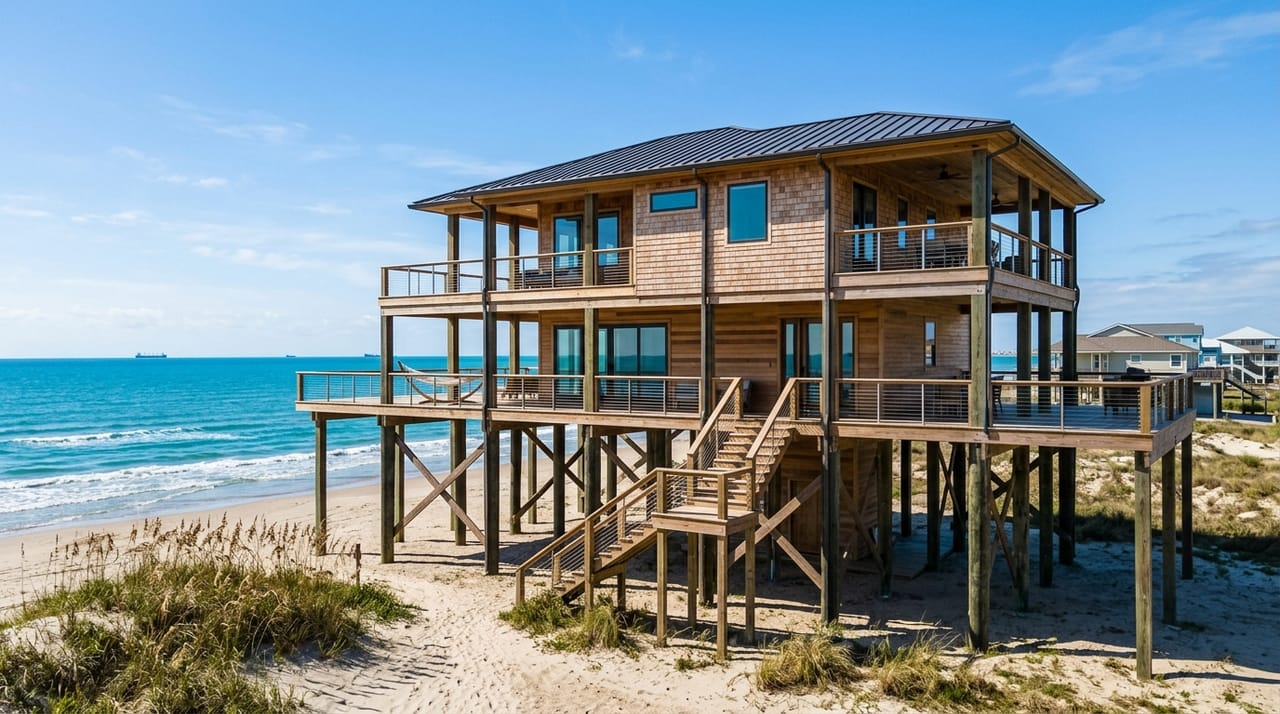
For canal-front and bayfront real estate buyers in Galveston, Tiki Island, Omega Bay, Clear Lake, and Port O'Connor, marine bulkheads and boat dock pilings represent crucial structural defenses. A failing bulkhead not only jeopardizes boat access, but also destabilizes the entire backyard lawn, patio slabs, in-ground swimming pools, and residential building foundations.
1. How Marine Bulkheads Work: The Deadman Anchor System
A marine bulkhead is a retaining wall designed to resist immense lateral soil and hydrostatic pressures. Vertical sheet pilings (wood, vinyl, or corrugated aluminum) are driven deep into the canal bottom. At the top, horizontal timbers called "walers" clamp the sheets together. Heavy galvanized steel tie-back rods (typically 5/8" to 1" diameter) connect the walers to concrete "deadman" anchors buried 15 to 20 feet back in the yard soil.
2. Three Fatal Marine Bulkhead Failure Modes
Secured Inspections audits waterfront bulkheads for three primary engineering failure mechanisms:
- Tie-Back Rod Corrosion: Saltwater penetrates sandy soil, rusting steel tie-back rods. When the rods snap, the top of the bulkhead rotates outward toward the canal, creating severe bowing.
- Toe Kick-Out and Mudline Scour: Heavy boat wake action and tidal currents scour away the sediment at the base of the bulkhead. When the sheet pile tip loses lateral earth embedment, the bottom kicks out into the canal.
- Sinkholes from Failed Geotextile Fabric: Tears in the filter fabric behind the sheets allow soil to wash into the canal during outgoing tides, creating dangerous voids and sinkholes beneath patios.
3. Marine Borer Attack on Timber Pilings
In warm, brackish Gulf Coast canal waters, marine borers (such as Teredo shipworms and Limnoria) bore into submerged timber pilings. These organisms hollow out the interior of pressure-treated wood while leaving the exterior surface appearing sound, reducing the structural cross-sectional area until pilings collapse under boat lift loads.
4. Forensic Diagnostic Equipment & Quality Assurance Protocols
Specialized environmental and forensic property diagnostics require calibrated laboratory-grade instrumentation. In our regional assessments across Houston, Galveston, and Brazoria, Secured Inspections follows strict chain-of-custody and quality assurance standards:
- Calibrated Instrumentation: Utilizing high-resolution FLIR® thermal imaging cameras, Tramex non-invasive impedance moisture meters, and digital pin probes verified against standard calibration blocks prior to field deployment.
- AIHA and NELAP Accredited Laboratories: All biological spore trap cassettes, lead-based paint dust wipe samples, and drinking water collection vials are shipped under strict chain-of-custody protocols to third-party accredited laboratories for independent microscopic and chemical analysis.
- Environmental Baseline Controls: Pulling duplicate indoor and outdoor control samples under identical temperature, barometric pressure, and humidity conditions to eliminate false positives and establish true indoor amplification.
- Texas Statutory Regulatory Compliance: Operating under active licenses issued by the Texas Department of Licensing and Regulation (TDLR Mold Assessment Consultant #1974) and Texas Department of Agriculture Structural Pest Control Service (SPCS #089201).
Whether diagnosing hidden subterranean cast iron pipe failures, toxic fungal contamination, or unbonded gas piping hazards, our laboratory-backed findings provide unambiguous documentation to protect occupant health and real estate equity.
Need an Objective Forensic Property Inspection?
Residential Pre-Purchase, ASTM E2018 Commercial PCAs, Termite WDI, Sewer Camera Scopes, and FLIR Thermal Infrared diagnostics across Greater Houston, Galveston, and Brazoria.
