

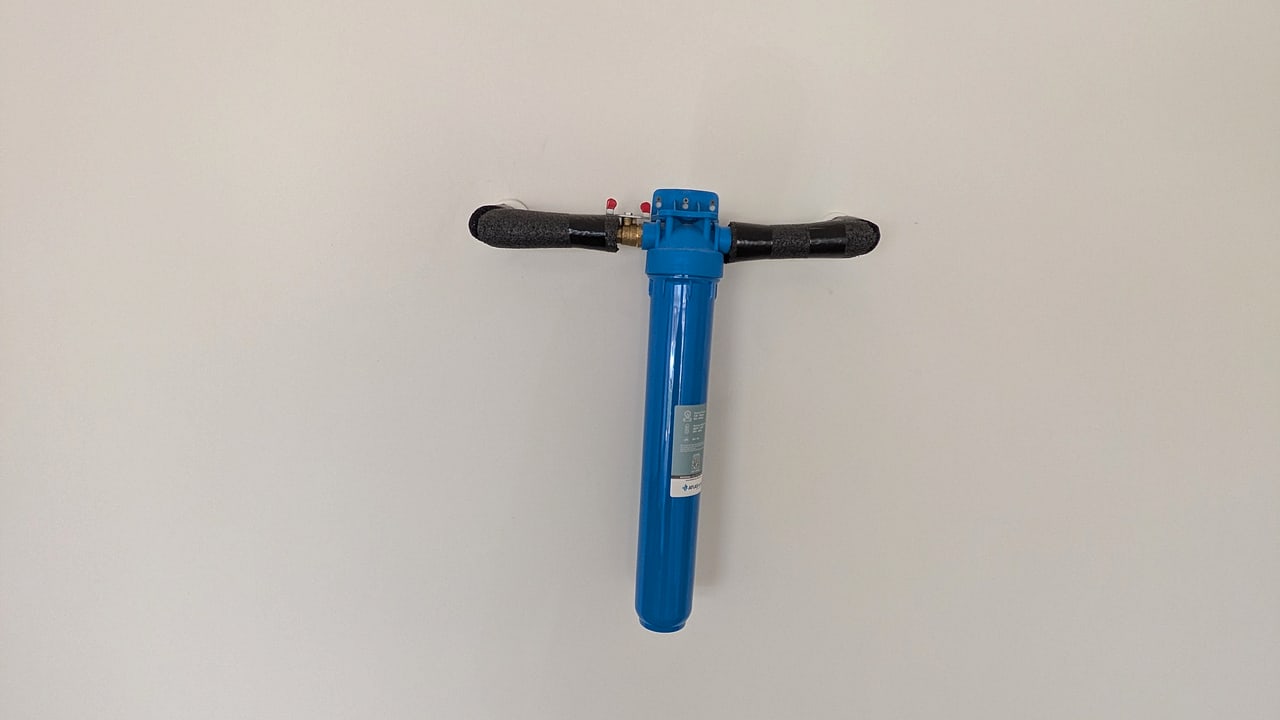
According to the Insurance Information Institute, plumbing water damage and freezing pipe bursts represent the second most common residential property insurance claim, accounting for nearly 24% of all homeowner losses with an average claim exceeding $12,500. For Texas homeowners who experienced the devastating pipe bursts of recent winter freezes, smart automated water shutoff valves have become essential property protection technology.
1. How Smart Automated Shutoff Valves Operate
Unlike simple point-of-use moisture "puck" sensors that only sound an alarm when water touches their metal contacts on the floor, whole-home smart shutoff systems are plumbed directly inline on the main incoming domestic water service pipe (typically 3/4-inch or 1-inch diameter). These systems continuously monitor three physical variables: water flow rate, dynamic line pressure, and ambient water temperature.
2. Flo by Moen vs. Phyn Plus: Turbine vs. Ultrasonic Sensors
Secured Inspections evaluates whole-home leak detection systems based on their underlying measurement physics:
- Flo by Moen (Mechanical Impeller / Pressure Testing): Uses an internal paddlewheel turbine to measure flow. Every night during zero-flow hours, the device performs an automated "Health Check": it closes its motorized ball valve for 2 minutes to isolate the plumbing system and monitors internal pressure decay down to 0.01 psi, detecting pinhole leaks as small as one drop per minute behind walls.
- Phyn Plus (Ultrasonic Flow & Pressure Waves): Uses dual high-frequency ultrasonic transducers that sample water velocity 240 times per second. By analyzing microscopic acoustic pressure wave signatures, Phyn distinguishes between a running toilet, a dishwasher fill cycle, and an active pipe burst, shutting off water instantly without requiring daily mechanical valve cycling.
3. Essential Installation Guidelines for Home Inspections
During home inspections, Secured Inspections verifies: installation downstream of the main pressure reducing valve (PRV); presence of a 3-valve manual bypass loop; functional battery backup pack or UPS to ensure valve operation during electrical grid power outages; and proper grounding bonding across the plastic meter body.
4. Residential Building Science & TREC Standards of Practice
A certified residential home inspection is a rigorous evaluation of interconnected building systems. Under the Texas Real Estate Commission (TREC) Standards of Practice (§§535.227–535.233), Secured Inspections executes a systematic forensic protocol across all major home components:
- Structural Envelope & Elevation Survey: Auditing foundation slabs, crawlspace framing, exterior masonry weep screeds, roof trusses, and attic ventilation using digital altimeters and thermal imaging to detect active movement and moisture intrusion.
- Electrical Life-Safety Diagnostics: Verifying arc-fault circuit interrupter (AFCI) and ground-fault circuit interrupter (GFCI) trip response, main service grounding electrode bonding, panelboard temperature gradients, and branch wiring integrity.
- Mechanical HVAC & Indoor Air Quality: Testing sensible and latent cooling split differentials, condensate drainage safety float switches, combustion air supplies, gas furnace heat exchangers, and ductwork insulation R-values.
- Plumbing Supply & Drainage Pressure Testing: Checking static water pressure, thermal expansion tanks, water heater temperature-pressure relief (TPR) discharge lines, fixture flow, and waste drainage performance.
By delivering comprehensive, clear, and data-driven inspection reports, our forensic team ensures prospective Texas homeowners possess complete clarity regarding property condition before removing contractual contingencies.
Need an Objective Forensic Property Inspection?
Residential Pre-Purchase, ASTM E2018 Commercial PCAs, Termite WDI, Sewer Camera Scopes, and FLIR Thermal Infrared diagnostics across Greater Houston, Galveston, and Brazoria.
